Blessed are the Pets? Mary Dzon Discusses Francis of Assisi and the History of Saints and Pet Blessings
Published: October 3, 2023 8:31am EDT
Mary Dzon, University of Tennessee
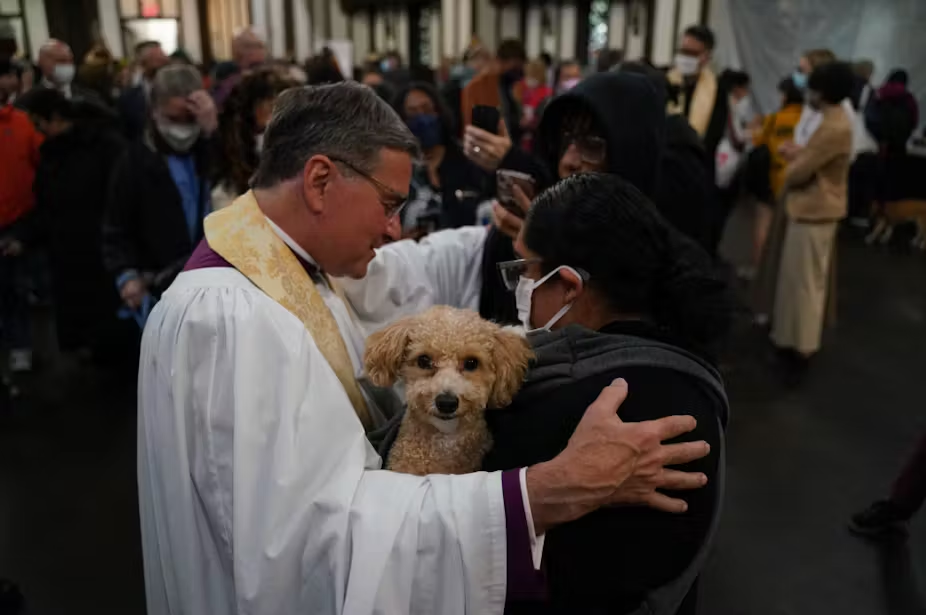
Each year, if you happen to be in New York around Oct. 4, you may catch sight of something unusual: a whole menagerie of animals being welcomed into the Cathedral of St. John the Divine, from spaniels and parrots to even the occasional camel or cow.
Since the end of the 20th century, it has become more and more common in the United States for animals and their human companions to be blessed on or around the feast of St. Francis of Assisi. The focus is usually on pets, though St. John the Divine’s Episcopal service is especially spectacular, with all kinds of creatures participating in a liturgy that includes a procession into the sanctuary, followed by blessings of individual animals outside.
What would Francis have thought? It’s hard to say – though he wasn’t a fan of his fellow friars keeping pets. But as a scholar of medieval Christianity, I see a long history of people looking to Francis and other Catholic saints as models of caring for all creatures within creation.
_-_Saint_Anthony_Abbot_Blessing_the_Animals,_the_Poor,_and_the_Sick_-_Google_Art_Project.jpg)
Not just Francis
Outdoor blessings of animals have been documented in Rome for at least a century, too – but on Jan. 17, the feast of St. Anthony the Abbott, who lived in Egypt in the third and fourth centuries. A number of saints, in fact, can be associated with modern-day blessings.
Anthony, a hermit who lived in the desert, was not known to have been friendly with animals in the way that Francis was. Yet kindly lions dug a hole for Anthony so he could bury the body of the holy hermit Paul, then licked Anthony’s hands and feet, “begging for his blessing,” according to the account by St. Jerome.
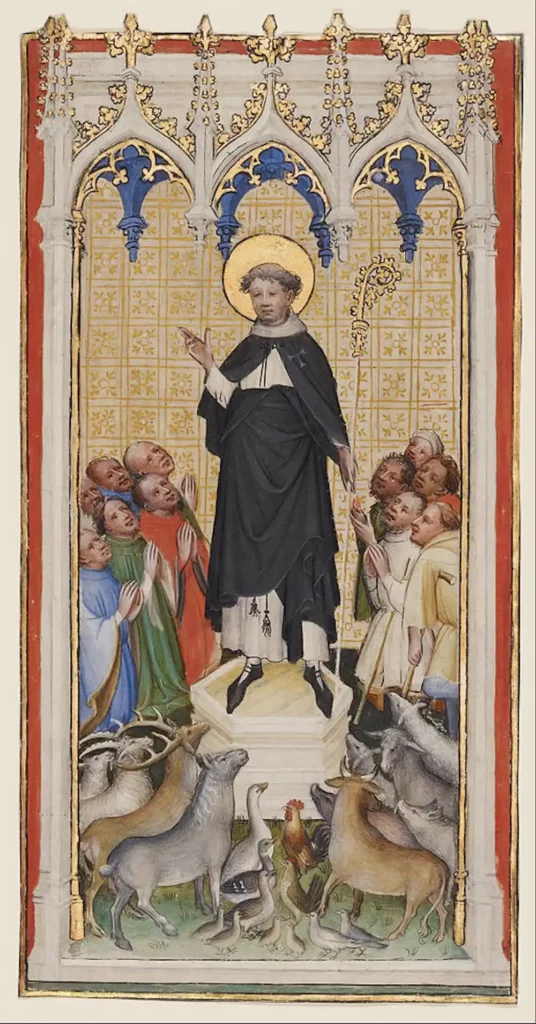
Medieval iconography commonly portrayed Anthony with a companion pig, stemming from the fact that a medieval religious order named after him bred pigs to feed people in need. The creatures wore bells and were permitted to roam free in the streets to forage.
A well-behaved group of animals, including two pigs, is gathered before Anthony Abbot in a miniature attributed to the Master of St. Veronica, a German painter in the early 15th century. Here the saint holds up his hand as if to bless the kneeling people behind him, as well as the reverent animals in front.
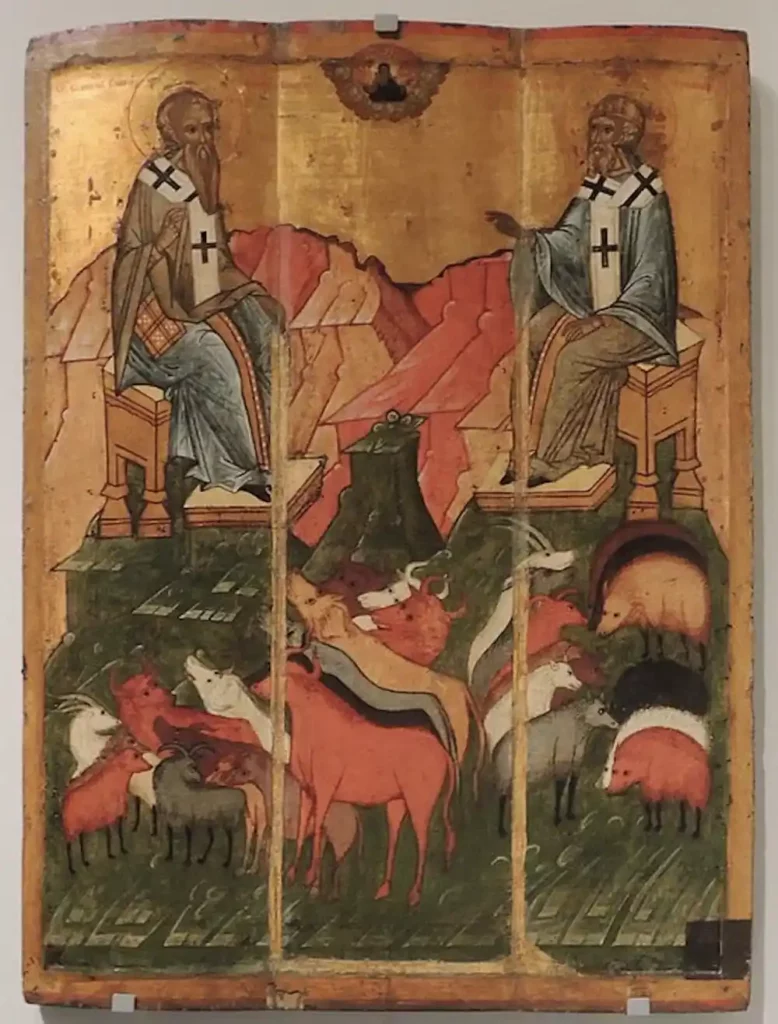

Another saint associated with animals, and known to have blessed them, is Blaise, a bishop of Sebaste. An influential 13th century collection of saints’ lives, “The Golden Legend,” recounts that Blaise took refuge in a cave to avoid persecution under the Roman Emperor Diocletian. There, “[b]irds brought him food, and wild animals flocked to him and would not leave until he had laid hands on them in blessing. Moreover, if any of them were ailing, they came straight to him and went away cured.”
A Russian icon dating to the 15th century shows Blaise seated on a throne above a gathering of animals, some of whom look up to him in awe.
‘The sweetness of his love’
So why is it that Francis, the founder of the Franciscan religious order, became associated with animals in America? He has long been considered the patron saint of ecology, and bird-bedecked statues of the 13th century saint are often featured in gardens.
Many early texts about Francis speak of his intuitive connection with and concern for animals, especially those he associated with Jesus: lambs, not surprisingly, but also the worm, which reminded him of Christ’s humility.
Today’s most popular story about the Italian saint’s interactions with animals was also the most popular in the Middle Ages, judging from the surviving iconography: his preaching to the birds.
Francis’ first biographer, the Franciscan brother Thomas of Celano, relates that once when Francis was traveling, he came across a “great multitude of birds” and ran toward them. After he greeted them and saw that they didn’t fly away, he was filled with joy and he proceeded to preach a sermon to them, in which he told them they should praise their Creator. After mingling with them, he blessed them and made the sign of the cross, then “gave them permission to fly off.”
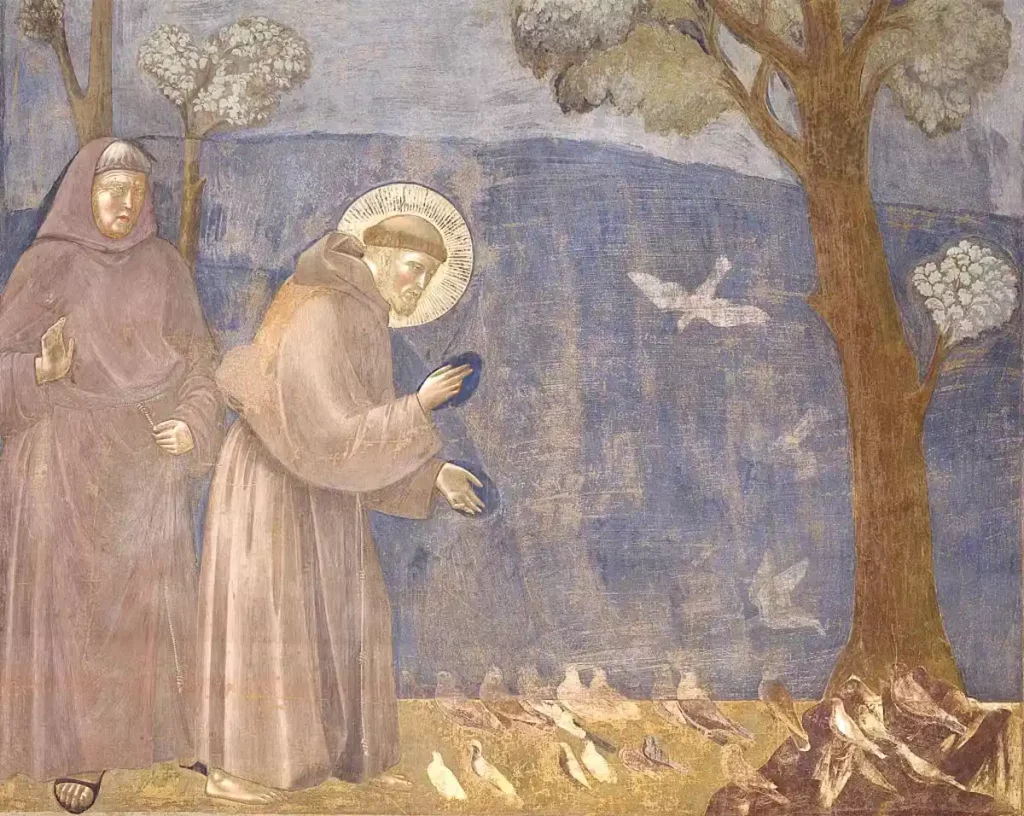
Francis likewise exercised gentle authority when he chided “shrieking and chirping” swallows in Alviano, Italy, as he was about to preach to people gathered there: “My sister swallows, now it is time for me also to speak, since you have already said enough.” The swallows duly complied.
Thomas of Celano’s biography of Francis goes on to describe how “even irrational creatures recognized his feeling of tenderness toward them, and sensed the sweetness of his love” – as when he released a rabbit from a trap, caressed it “with motherly affection,” and the creature kept coming back.
Love animals – within limits
The relatively small number of surviving texts that Francis himself wrote reveal his thoughts about the myriad creatures around him. In his well-known “Canticle of the Creatures,” a song in Italian that praises God and celebrates the beauty of creation, Francis professes a familial relationship with everything in nature, most famously “Brother Sun” and “Sister Moon.”
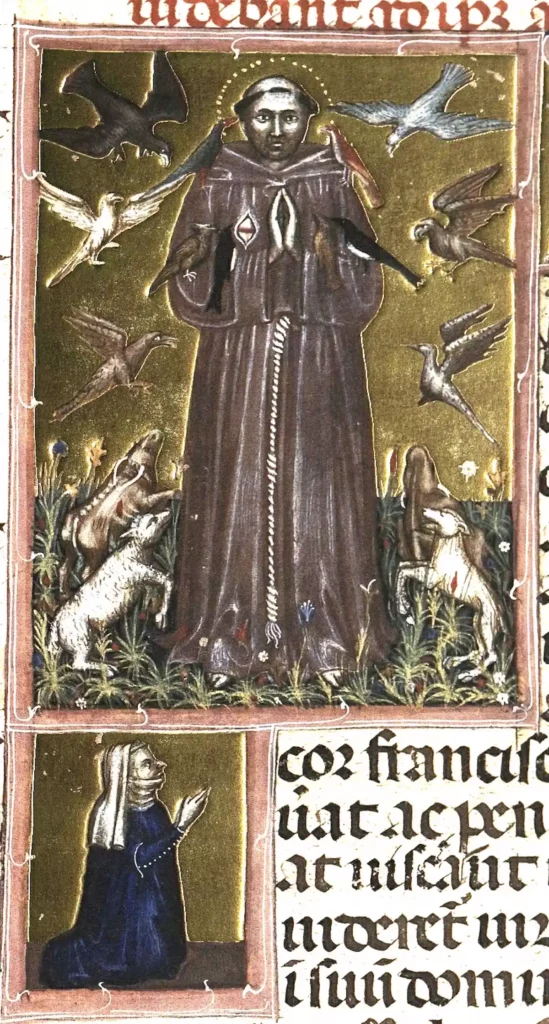
Not as well known is Francis’ “Earlier Rule,” which he wrote to provide guidelines for his friars. Since their purpose in life was to spread the gospel in strict imitation of Christ, especially his poverty, Francis insisted that they not ride on horses or keep companion animals.
As I have learned from my research, this is a standard practice for early Christian and medieval ascetics. Keeping animals was seen as distracting, even frivolous, and risked drawing affections away from God. While Francis seems to have had more than enough love to share, he did insist that most of the animals he interacted with go free.
The haloed wolf
But perhaps Francis was not as opposed to pets as it may seem. Today, probably the second-most well-known story about Francis and animals is the tale of the wolf of Gubbio. After the saint establishes a pact of peace between the hitherto ravenous wolf and the previously terrified townspeople, the wolf is essentially left in their keeping.
According to “The Little Flowers of Saint Francis,” a compilation from the 14th century, “Brother Wolf” lived for two years in Gubbio after his life-changing encounter with the saint: “he tamely entered the houses, going from door to door … and he was kindly fed by the people.” As far as the people were concerned, he was a living embodiment, almost a relic, of the “virtue and holiness of Saint Francis.”
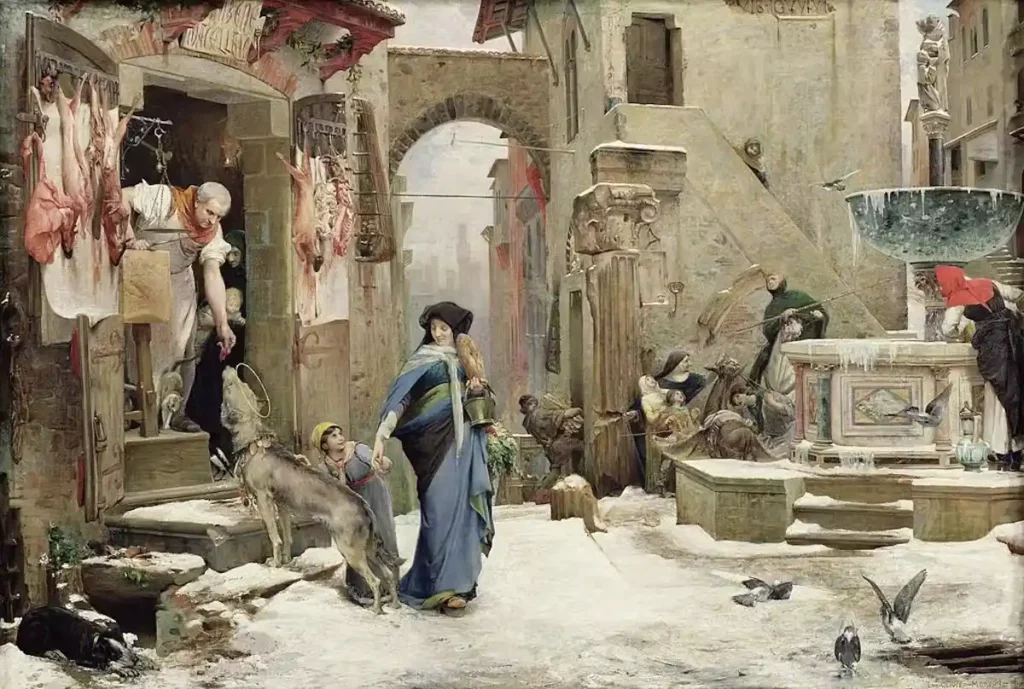
A 19th century painting by Luc-Olivier Merson provides a fascinating depiction of the wolf, endowed with a golden halo. He is seen placidly getting food from the butcher, as he stands on his doorstep, while a cat looks on and a little girl strokes his back.
While Francis and his fellow friars did not embrace the idea of pets, he did promote harmony among animals and humans, making him a fitting source of inspiration for blessings today. As religion scholar Laura Hobgood-Oster has noted, it is remarkable that the many animals gathered in St. John the Divine for over two hours each year behave so well. Perhaps they sense the sacred and are attracted to the Franciscan ideal of harmony: all members of creation, joyfully coming together to praise God.