Making the Story Real: A Day of Discovery at the Stokely Conference
On May 28, 2025, the University of Tennessee’s Department of English welcomed 16 middle and high school teachers from Anderson, Blount, and Knox counties to its annual Stokely Conference on Teaching Writing. This year’s theme, “Making the Story Real: Supporting Literary and Rhetorical Research through Archives and Multimodal Composition,” brought together local educators dedicated to bridging traditional writing assignments with real-world composing practices.
Exploring Exhibitions at the McClung Museum of Natural History & Culture
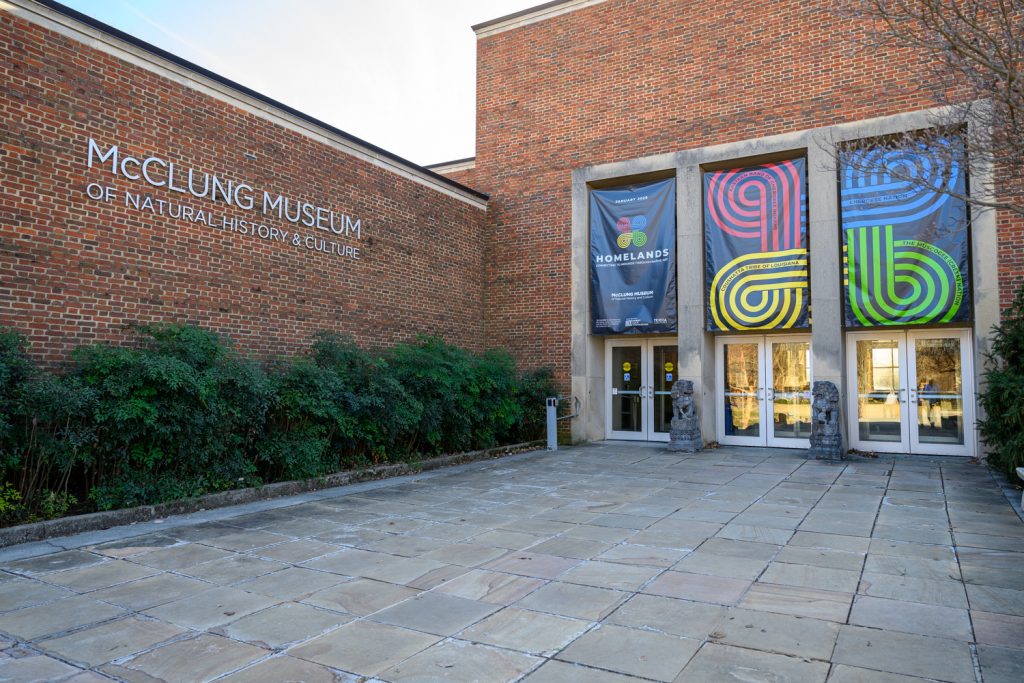
The participants started the day at the McClung Museum of Natural History & Culture, which graciously hosted the Conference and opened its exhibition and collaboration space to the group. The conference kicked off with a tour led by Lisa King, associate professor of English in Rhetoric, Writing, and Linguistics, whose interdisciplinary research and teaching interests include cultural rhetorics with an emphasis on contemporary Native American and Indigenous rhetorics, visual rhetorics, and material rhetorics. During her guided exploration of the McClung Museum’s new, premier exhibition, Homelands: Connecting to Mounds through Native Art, which features contemporary works by 17 Native artists and highlights the cultural and spiritual continuity of mounds as sacred spaces, King shared stories from behind the scenes of how the exhibition came to be, what “archive” can mean, and how objects can tell a story, a history, and/or make an argument. Teachers discovered how objects within the museum’s exhibits serve as storytellers themselves—each piece a source of multiple narratives of history and argument.

In an activity they can bring back to their classrooms, teachers selected an object from any exhibition in the museum and did a little research/sleuthing to help tell its story. They then talked together about what they found, discussing highlights, challenges, and what helped them connect to the object they chose.
Workshops on Multimodal Innovations
In one engaging session, Sarah Yancey, English PhD student in Literature, Criticism, and Textual Studies, led a workshop on “Connecting Students with Multimodal Archives.” She demonstrated techniques for students to curate their own archives. Teachers participated in an “Archive of Me” exercise while exploring how digital tools like Knight Lab’s StoryMap JS can deepen students’ understanding of place and history.
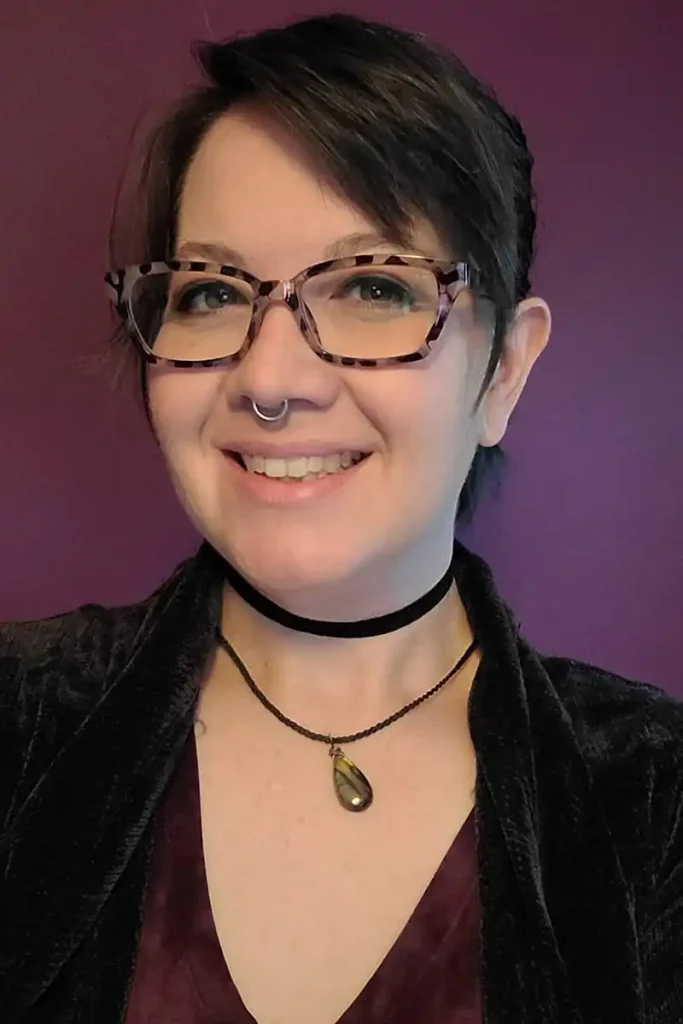
Greg Gillespie, English PhD student in Rhetoric, Writing, and Linguistics, led an interactive session on “Pop Culture and Archives: Using Media to Reach New Genres,” bringing a fresh perspective by integrating media platforms like YouTube and TikTok into archival research projects. He illustrated how these can spark student interest in historical topics by blending archival content with pop culture—a strategy designed to captivate students’ imaginations.

Empowering Educators
Throughout the day, the teachers engaged in hands-on workshops tailored to their local contexts and student needs. They left equipped with knowledge and practical strategies for teaching archival research, critical inquiry, and multimodal composition. From developing activities centered around archival analysis to embracing new digital genres for storytelling, their teaching toolkit expanded significantly. One teacher said they learned “how multimodal pedagogy can increase student engagement and connection with the texts they are reading” and another said, “a physical object that can be touched is better than even a picture in getting students to engage in a topic.” The conference was referred to by one teacher as “one of the best I have been to at UT.” Another said it was “the best conference I have attended in recent memory” and that a key takeaway was that “actively making students curious will help them interact with readings.” Finally, when asked about how we can support teachers in the future, one said, “Continue offering resources like this workshop for teachers to get valuable resources for their classrooms.”
A Legacy that Supports Learning
The Stokely Conference on Teaching Writing is made possible by a generous donation from the local Stokely family through the William B. Stokely, Jr., Foundation. The Stokely family’s ties to UT began with William B. Stokely, Sr., who was captain of the 1894 Tennessee football team, and several Stokely family members have followed him to graduate from UT in the years since. The Stokelys have been active supporters of the University of Tennessee, creating a considerable legacy of giving to the liberal arts, athletics, business, and World Languages and Cultures programs. To the English Department, their gift supports technology for the Judith Anderson Herbert Writing Center and provides for the Stokely Conference, which brings together UT faculty and other experts to provide information and promote dialogue and conversation among area language arts teachers. The Stokely Conference empowers passionate, committed teachers to learn, renew, and reflect upon approaches to teaching writing to all students.
This year’s conference was organized by Kirsten Benson, director of the Judith Anderson Herbert Writing Center, and Sean Morey, professor of English in Rhetoric, Writing, and Linguistics, and director of the First-Year Composition program. The Stokely Conference on Teaching Writing is an annual event; contact Kirsten Benson, kbenson@utk.edu, for more information.