Scholar Spotlight: Marie Taylor
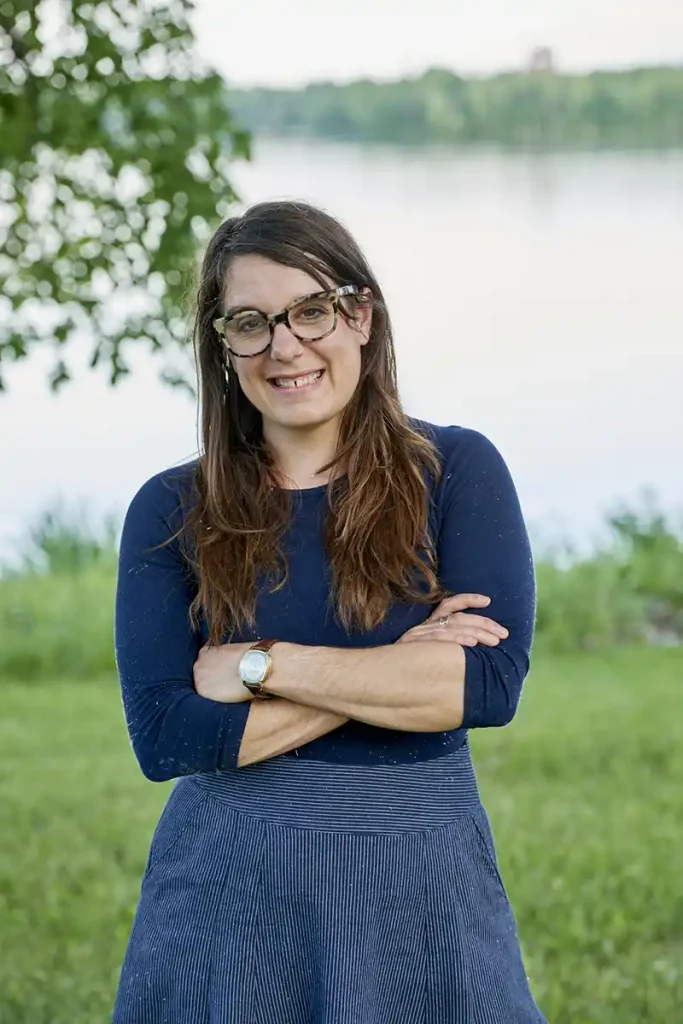
“I study the writings of British colonists and Indigenous people in America in the seventeenth century. I analyze letters, diaries, sermons, medical manuals, and political documents in order to investigate how colonial people and their writings were influenced by Native American people, places, and ideas.”
Marie Taylor
Assistant Professor
Department of English
Analyzing early colonial texts in light of the Indigenous context within which they were written helps us better envision the complex and shifting world out of which early American literature was produced.
Native American tribes had established systems of governance, trade, diplomacy, land use, and religion. When the first English settlers arrived, they were dependent on Indigenous people, ideas, and practices for survival. Native American concepts and ideas became part of the ways in which colonists made sense of their colonial experience in writing.
The early British colonists were much more aligned with Shakespearian England than they were with contemporary Americans. They thought about religion, science, medicine, and themselves in ways that are quite foreign to us today.
Likewise, this period also helps us see Indigenous American communities in a new light. America was governed by numerous Native nations with distinct practices, languages, and social structures—vastly more cosmopolitan than we think.
Looking at the texts from this time period in this light unlocks a whole new way of understanding what it meant to be human in the past.
Why I do what I do
I’ve always loved stories. From a young age, stories allowed me to imagine multiple lives and alternative realities. I also think that stories are foundational to understanding what it means to be human.
During a graduate course on Native American literature, I realized that my own experience growing up in South Dakota had been deeply shaped by both historic and contemporary Native people, stories, and practices. Learning more about Native people past and present has helped me rethink the ways in which American stories were made, told, and interpreted.
Currently working on
I have a forthcoming chapter in the collection Gatherings: New Directions in Indigenous Book History that I co-wrote with two Dakota scholars about a series of names, dates, and phrases inscribed upon a boarding school building in my hometown of Rapid City, South Dakota.
The boarding school was later turned into a government-run hospital and is now a tribally operated community health center. The writings come from a wide variety of folks who have spent time on the site over the past 100 years. All three of us have had family members who lived or worked at the site. In the article, we think about how family stories, kinship, and place can serve as analytical frameworks for interpreting the inscribed text.